
Municipality of Horgen
Efficient System Integration and Online Launch of the Local Heritage Image Archive

Key Benefits
Initial Situation
The Local Heritage Archive – Then and Now
The local heritage archive was founded in the 1950s by Ernst Gattiker, a member of the Nature and Bird Protection Association and co-founder of the Nature and Heritage Protection Commission. He began taking photographs in the municipality of Horgen—capturing historic buildings, important events, and nature. Over time, repro photography was added, as acquaintances entrusted him with photos from past decades, which he also wanted to include in the archive. The images were mounted on cards, annotated with relevant information, and organized according to their location within the grid system of the Horgen town map.

Until 2008, the archive was maintained manually in an analog format. From 2008 onwards, Hans Erdin, the current local heritage archivist, pushed for the digitization of nearly 29,000 analog images on A6 cards, including their associated texts. A relatively simple and fast FileMaker solution was chosen, known for its strong database capabilities and lack of storage limitations.
After digitization and a significant expansion of the image archive, it once again became necessary to adopt a new solution. Hans Erdin recognized the need to make this extensive collection of historical and current images accessible online to a broader public.
A key factor was the enormous workload involved in handling internal and external image requests. Images had to be searched based on specific criteria, compiled into PDFs, and described via Excel files. Often, follow-up requests with more precise criteria required repeated searches.

Since the municipal administration of Horgen was also looking for a DAM solution for its own images and assets, it was decided to leverage synergies. The goal was a solution that could cover all needs and go online as quickly as possible. Another crucial factor was ensuring data protection and copyright compliance alongside open access—especially important given the strict regulations for public administrations. Hosting in Switzerland was therefore essential.
Solution and Application
34,000 Images for the Public
During the evaluation process, n c ag impressed the municipality of Horgen both with its DAM solution myASSETS and on a personal level. In the words of Hans Erdin: “A good product, easy to use and hosted in Switzerland, combined with a project team that truly understands the publishing business. We felt well supported from the very beginning, and the overall package was convincing.”

The myASSETS platform is now configured so that users can navigate and operate according to their roles and permissions stored in the system. The role matrix includes profiles such as public users, power users, administrators, and staff. Specific areas for Horgen—such as the local heritage archive, art objects, chronicle, and general images—are organized into pools. Depending on their role, users see the pools assigned to them. Each pool essentially functions as its own DAM solution within the overall system. Municipal staff can log in via single sign-on, while public users require no password and can simply access the system via dam.horgen.ch.
Implementation
Professional and Collaborative Project Execution
From the very first meeting, there was an active and effective exchange between the project teams of the municipality of Horgen and n c ag. As a result, the project was launched, implemented, and brought online very quickly.

During the preparation phase, the project lead from Horgen and the project manager from n c ag defined the key data fields from the FileMaker database to be transferred into myASSETS. Some were adopted directly, while others were renamed or newly added.

Additional project requirements were also implemented by n c ag, returned to Horgen for testing, and then refined again. After the first test migration, further adjustments and optimizations were made. The second test migration was largely flawless, allowing the full migration of images. To everyone’s satisfaction, the new online archive went live after just three months, on December 26, 2025.
Conclusion and Outlook
More Time for What Matters Thanks to myASSETS
Since the portal went live, the workload for staff in providing images has dropped dramatically—now close to zero. Users—whether residents or municipal departments—can now independently search for image material. They can browse an archive of around 34,000 images at any time using simple keywords or advanced search options and are highly satisfied.

Another major benefit is the georeferencing of assets and the integrated map view. For example, if an image of a building is stored with coordinates, the map automatically displays its location. This is especially useful for users working with location-based information.
Looking ahead, Hans Erdin hopes for increased use of AI, particularly for faster image recognition, automated georeferencing, and improved searchability. Efficient tools and powerful search functions remain essential for any DAM solution.

Another future topic is expanding the help section into a full customer center, providing users with audiovisual guides and FAQs to support them through the search process, always with the goal of enabling them to find results independently and quickly.

Hans Erdin, Municipality of Horgen
Local Heritage Archivist
«We chose n c ag because they offer a strong product that is easy to use, hosted in Switzerland, and supported by a team with deep expertise in publishing. We felt well supported from the very beginning, and the overall package was convincing.»

Carina Frei, Municipality of Horgen
Webmaster
«Overall, a professional and enjoyable collaboration. The collegial teamwork allowed me to implement the project smoothly alongside my daily work.»
About the Municipality of Horgen
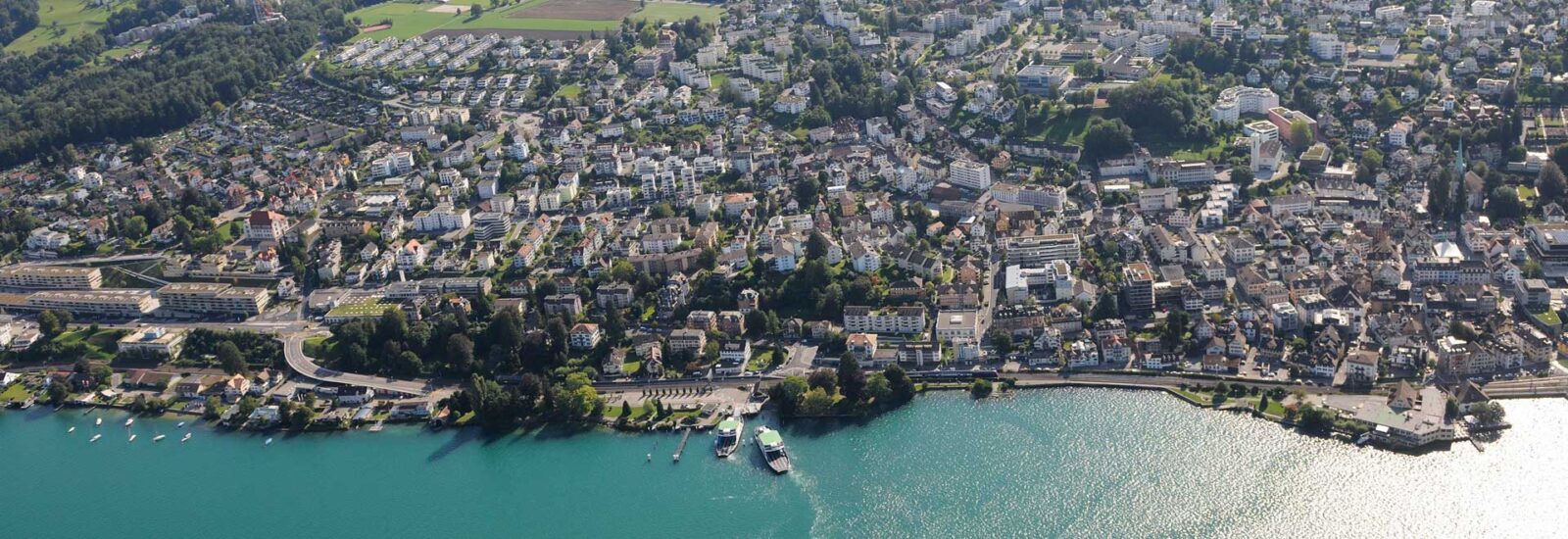
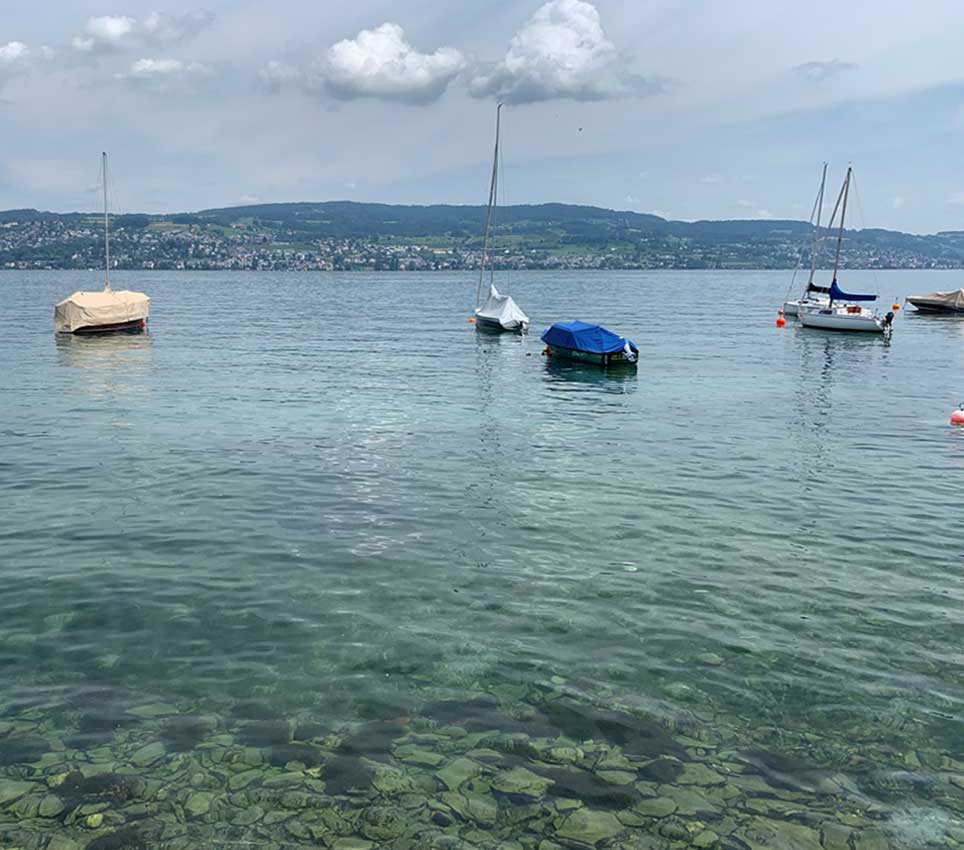
Horgen is an attractive and vibrant municipality in the canton of Zurich and the administrative center of the Horgen district. It is located around 15 kilometers southwest of the city of Zurich on the left shore of Lake Zurich and is part of the economically strong Zimmerberg region. With excellent transport connections via S-Bahn, ferry, and motorway, Horgen is a popular place to live and work in the greater Zurich area. It offers modern infrastructure, good schools, and diverse shopping opportunities in an appealing environment between lake and mountains.
The municipality has around 25,000 residents and combines a high quality of life with a natural setting. Lake Zurich, the Zimmerberg recreational area, and the nearby Sihlwald forest provide numerous opportunities for leisure, sports, and relaxation.
If you would like to learn more

Mike Spoerri
COO, Key Account Manager
More of our customers

AMAG
With myPUBLISH, AMAG has chosen a flexible publishing portal to automate its production of advertising materials, saving time and money over the previous solution.

Hotelplan Suisse (MTCH AG)
The travel company uses myPUBLISH to manage its media and product information with maximum efficiency and to automate its travel catalog page layout.

Interhome (HHD AG)
Automated catalog production, advertising material for all channels and efficient management of product information are all easily achieved for the tourism company thanks to our central portal myPUBLISH.

Eurotrek AG
With myPUBLISH, the travel company manages all media and product information in a central portal and automates the entire catalog production at the same time.

Feldschlösschen Getränke AG
With centralized media and product information, we make Feldschlösschen’s marketing efficient and enable automated price list production for print and online.

Renault Suisse SA
Renault Suisse doesn’t just count on our expertise in image editing and layout services – using the central publishing portal, they cut costs for producing advertising materials.

Twerenbold Reisen AG
The travel operator uses myPUBLISH to automate its catalog production and relies on our professional and cost-effective media services to produce advertising materials.

Knecht Reisen AG
With myPUBLISH, the travel company not only manages its media and product information highly efficiently in one portal, but also automates its catalog production.